

Student Productivity Tips 2026: The Complete Guide to Studying Smarter, Managing Your Time, and Achieving Better Results

If you are searching for student productivity tips in 2026 that actually make a difference — not recycled advice about waking up at 5am or buying a fancy planner — you are in exactly the right place. The honest truth about student productivity is that most students are not struggling because they are lazy or incapable. They are struggling because nobody ever taught them a system that genuinely works for the specific pressures and demands of student life. Studying for hours without retaining anything. Feeling constantly behind despite working constantly. Knowing an exam is coming but somehow still not starting until the night before. These are not personal failures — they are the predictable result of using the wrong study strategies without realizing it, and they are completely fixable with the right approach.
This comprehensive guide brings together the most effective, research-backed productivity strategies specifically designed for students in 2026 — taking into account the unique challenges of modern student life including digital distractions, social media pressure, remote learning environments, and the increased academic competition that students face today. Every strategy in this guide is practical, immediately actionable, and explained in enough depth that you can begin applying it from your very next study session. Whether you are managing a demanding university course load, preparing for major examinations, trying to balance studying with part-time work or freelancing, or simply trying to feel less overwhelmed and more in control of your academic life — this guide will give you the tools, the strategies, and the mindset to make genuine, lasting improvements in your productivity and your results.
What You Will Learn in This Guide
- 1. Why Most Students Study Hard But Still Struggle With Results
- 2. Why Student Productivity Is More Important Than Ever in 2026
- 3. Understanding How Your Brain Actually Learns and Retains Information
- 4. The Complete Student Daily Routine That High Performers Use
- 5. Proven Study Techniques That Are Backed by Science
- 6. Time Management Strategies That Work for Busy Students
- 7. How to Beat Procrastination Once and For All
- 8. Best Productivity Tools and Apps for Students in 2026
- 9. How to Study Effectively During Exam Season
- 10. Common Productivity Mistakes Students Make
- 11. Expert Tips From High-Achieving Students
- 12. Student Productivity Checklist
- 13. Frequently Asked Questions
- 14. Conclusion
Why Most Students Study Hard But Still Struggle to Get Good Results

Here is something that most academic advice completely fails to address. The problem for the majority of students who underperform relative to their actual intelligence and effort is not a lack of studying — it is studying in ways that feel productive but are actually producing very little real learning. Rereading your notes three times feels productive. Highlighting entire textbook pages feels productive. Copying out lecture slides in neat handwriting feels productive. But decades of cognitive science research consistently shows that these passive, low-effort study strategies produce dramatically inferior learning outcomes compared to active, retrieval-based study methods — even though they feel much easier and more comfortable to do.
The gap between how much time students put into studying and the results they get is almost entirely explained by the quality of their study method, not the quantity of their study hours. A student who studies using effective techniques for two focused hours will consistently outperform a student who sits at their desk for six hours reading and rereading passive notes. Understanding this single principle — that study quality matters enormously more than study quantity — is the foundation of every effective student productivity system, and internalizing it will fundamentally change how you approach your academic work from this point forward.
Why Student Productivity Matters More Than Ever in 2026
The academic landscape that students navigate in 2026 is significantly more demanding than it was for previous generations, and the skills required to succeed have changed substantially. University courses have become more intensive and more globally competitive. The volume of information students are expected to engage with has grown enormously with the internet’s expansion. Digital distractions — social media, streaming platforms, messaging apps, and the endless scroll of content feeds — compete for student attention in ways that are specifically engineered by some of the world’s most sophisticated technology companies to be as difficult to resist as possible. And the stakes of academic performance have risen, with an increasingly competitive graduate job market meaning that the difference between a strong academic record and a mediocre one has real, lasting consequences for career opportunities.
At the same time, the tools available to students who know how to use them effectively have never been more powerful. AI-assisted learning tools, spaced repetition apps, digital planning systems, and online learning resources give the organized, productive student access to capabilities that were unimaginable for previous generations. The students who thrive in 2026 are those who develop genuine productivity skills — not just studying habits, but a comprehensive personal system for managing their time, protecting their focus, learning efficiently, and maintaining the physical and mental wellbeing that sustained academic performance requires. These are learnable skills, and this guide is going to teach them to you.
Understanding How Your Brain Actually Learns and Retains Information

Before getting into specific productivity strategies, it is worth understanding the fundamental principles of how human memory and learning actually work — because every effective study technique is built on these principles, and understanding the why behind a strategy makes you far more likely to use it correctly and consistently. Human memory works through a process of encoding, consolidation, and retrieval. Encoding is the initial process of taking in new information. Consolidation is the process by which your brain strengthens and integrates that information into long-term memory, which happens primarily during sleep. And retrieval is the process of actively recalling information from memory — which is not just a way of testing what you know, but is itself one of the most powerful ways of strengthening the memory itself.
This last point — that retrieval practice strengthens memory — is one of the most important and most underutilized insights from cognitive science for students. Every time you actively recall a piece of information from memory without looking at your notes, you strengthen the neural pathways associated with that memory and make it easier to retrieve in the future. This is why self-testing, flashcards, and practice questions are so much more effective for long-term retention than rereading notes. Your brain also learns better in spaced sessions — multiple shorter study sessions spread over time — than in single long cramming sessions, because the spacing forces repeated retrieval and consolidation cycles that build much stronger long-term memories. Understanding these two principles alone — retrieval practice and spaced repetition — and building your study habits around them will produce a measurable improvement in your academic results.
The Complete High-Performing Student Daily Routine for 2026

| Time Block | Activity | Duration | Productivity Purpose |
|---|---|---|---|
| 6:30 — 7:00 AM | Wake up, hydrate, brief movement or light exercise | 30 minutes | Activates brain and body for focused work ahead |
| 7:00 — 7:30 AM | Review daily plan — 3 top priorities for the day | 30 minutes | Sets intentional direction — prevents reactive day |
| 7:30 — 9:30 AM | Deep study block — hardest or most important subject | 2 hours | Peak cognitive performance window — use for hardest work |
| 9:30 — 9:45 AM | Break — walk, stretch, water, no screens | 15 minutes | Mental recovery — prevents cognitive fatigue |
| 9:45 — 11:45 AM | Second deep study block or university classes | 2 hours | Continued high-focus work while energy is strong |
| 12:00 — 1:00 PM | Lunch break — proper meal, away from study space | 1 hour | Physical nourishment and mental reset |
| 1:00 — 3:00 PM | Classes, lighter study tasks, or review work | 2 hours | Post-lunch energy dip — suitable for lighter cognitive tasks |
| 3:00 — 3:30 PM | Short nap or rest (optional but highly effective) | 30 minutes | Cognitive restoration — proven to improve afternoon focus |
| 3:30 — 5:30 PM | Third study block — assignments, practice problems, flashcards | 2 hours | Second wind focus period — strong for active recall practice |
| 5:30 — 7:00 PM | Physical activity, social time, personal interests | 90 minutes | Essential for mental health and sustainable performance |
| 7:00 — 8:30 PM | Evening light study — review, reading, flashcard practice | 90 minutes | Consolidation review while day’s learning is fresh |
| 8:30 — 9:30 PM | Wind down — no screens, light reading, reflection | 1 hour | Prepares brain for sleep consolidation — critical for memory |
| 9:30 — 10:00 PM | Plan tomorrow — update task list and priorities | 30 minutes | Eliminates next-day decision fatigue and morning chaos |
| 10:00 PM | Sleep — minimum 7 to 8 hours | 8 hours | Memory consolidation — the most important productivity tool |
This daily schedule represents an ideal framework rather than a rigid prescription. Your specific class times, personal energy patterns, and life circumstances will require adjustments — and that is completely fine. The key principles embedded in this structure are the ones that matter: protecting dedicated deep work blocks for your most cognitively demanding study, scheduling your hardest subjects during your peak energy hours (which for most people are in the morning), building regular breaks into your schedule rather than trying to study for hours without rest, and treating sleep as a non-negotiable productivity investment rather than a luxury to be sacrificed when deadlines approach. Implement these principles in whatever daily structure works for your specific situation, and you will see measurable improvement in both the efficiency and the quality of your study sessions.
Proven Study Techniques That Are Backed by Science

The Pomodoro Technique — Structured Focus in Short Powerful Bursts
The Pomodoro Technique is one of the most widely used and consistently effective time management and focus systems available to students, and it works because it is built on a genuine understanding of how human attention and concentration function. The system is beautifully simple: set a timer for 25 minutes and work on a single task with complete, undivided focus for the entire duration — no checking your phone, no switching tabs, no interruptions of any kind. When the timer sounds, take a 5-minute break where you step away from your work completely — stand up, stretch, get water, look out the window. This 25-minute work session followed by a 5-minute break is one Pomodoro. After completing four Pomodoros, take a longer break of 20 to 30 minutes. This structure works because it makes sustained focus psychologically manageable — knowing you only need to maintain concentration for 25 minutes at a time, rather than an indefinite period, makes it much easier to actually begin working and to resist distractions while you do. It also prevents the mental burnout that comes from trying to study for hours without structured rest, and the regular short breaks maintain the kind of mental freshness that produces consistently high-quality work rather than diminishing returns.
Active Recall — The Most Powerful Study Method Available
Active recall is the practice of testing yourself on material you are studying — forcing your brain to retrieve information from memory rather than simply re-exposing it to information passively. The consistent finding of cognitive science research is that active recall produces dramatically stronger long-term memory retention than any form of passive review, and yet it remains significantly underused by students because it feels more difficult and uncomfortable than passive rereading — which is precisely why it works so much better. The discomfort of not being able to immediately recall something, and the effort required to retrieve it, is what drives the brain to strengthen the neural pathways associated with that memory. Practically, active recall means covering your notes and trying to recall the main points from memory, answering practice questions without looking at your notes, using flashcard systems where you test yourself before seeing the answer, explaining concepts aloud from memory as if teaching them to someone else, and closing your textbook after reading a section and writing down everything you can remember before looking back. Integrating active recall into every study session — rather than using it only as a last-resort exam preparation tool — is one of the single highest-impact changes any student can make to their productivity and their academic results.
Spaced Repetition — Study Less, Remember More
Spaced repetition is a learning system based on the well-documented psychological phenomenon called the forgetting curve — the observation that memory of new information declines rapidly over time unless it is actively reviewed. The principle of spaced repetition is to review information at strategically increasing intervals — reviewing new material after one day, then three days, then one week, then two weeks, and so on — in a way that catches the information just before it would naturally be forgotten and forces a retrieval that strengthens the memory significantly. Digital tools like Anki (the gold standard free flashcard application used by medical students and language learners worldwide) implement spaced repetition algorithms automatically — scheduling each card for review at exactly the optimal interval based on your previous recall performance. Students who use Anki consistently for building and reviewing flashcards across their courses report significantly better retention of large volumes of information with significantly less total study time than students using conventional review methods — because they are studying the right material at the right time rather than arbitrarily reviewing everything or only reviewing material they already know well.
The Feynman Technique — Understanding So Deep You Could Teach It
The Feynman Technique is named after Nobel Prize-winning physicist Richard Feynman, who was famous for his ability to explain extraordinarily complex scientific concepts in simple, accessible language — and who believed that if you cannot explain something simply, you do not truly understand it yet. The technique involves four steps: choose a concept you are studying, write an explanation of it as if you were teaching it to someone with no prior knowledge of the subject, identify the gaps in your explanation — the places where you struggled, used jargon without explanation, or felt uncertain — and then return to your source material specifically to fill those gaps. Then repeat the process with a clearer, simpler explanation. This technique is extraordinarily effective because it forces a depth of engagement with material that surface-level review never achieves. You cannot fake understanding through the Feynman Technique — the gaps in your knowledge become immediately and unmistakably apparent the moment you try to explain something clearly, which is exactly what makes it so powerful as a diagnostic and learning tool.
Time Management Strategies That Actually Work for Students in 2026
The Weekly Review — Your Most Important Productivity Habit
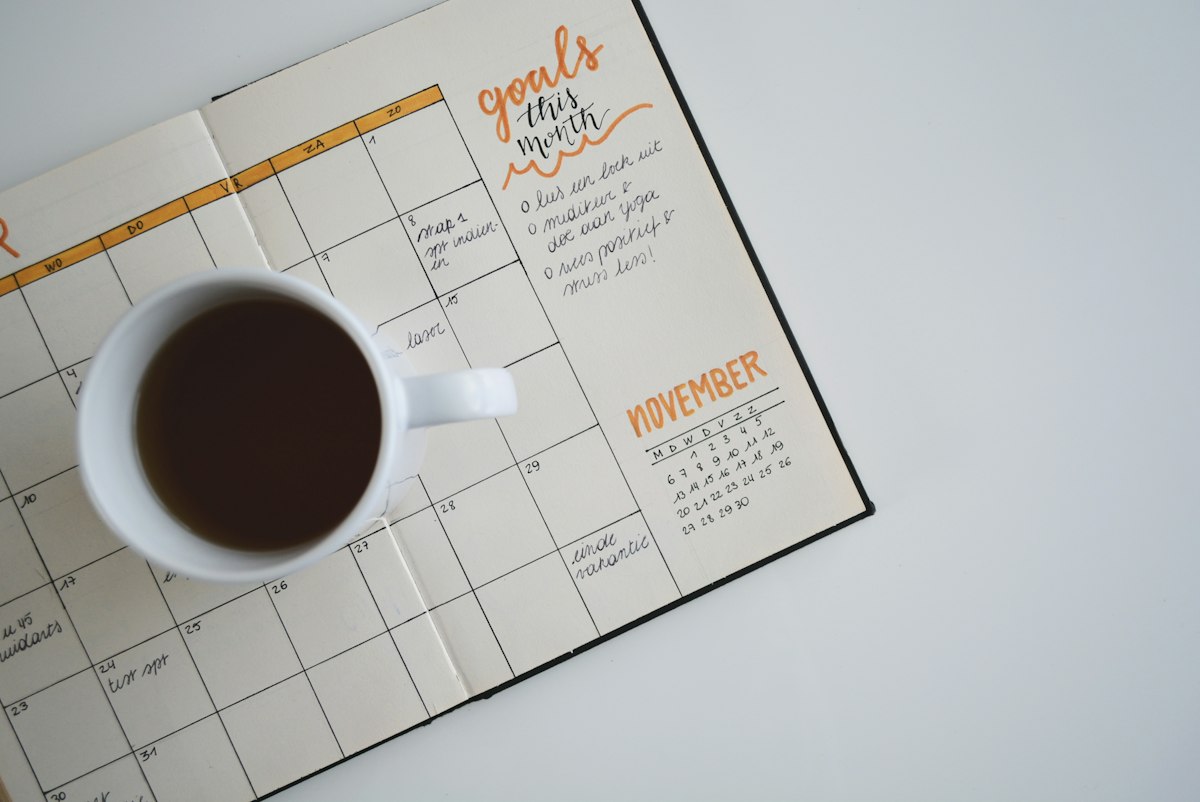
The single most impactful time management habit a student can develop is a consistent weekly review — a dedicated 30 to 45 minute session, ideally on Sunday evening or Monday morning, where you review everything that happened in the previous week and plan the week ahead with full awareness of your upcoming commitments and priorities. During your weekly review, collect and process every piece of information, task, and commitment that has accumulated over the past week — from assignment deadlines and exam dates to personal commitments and errands. Review your overall academic progress and identify any areas where you are falling behind relative to your study schedule. Plan the coming week at a task level, blocking time on your calendar for your most important study sessions, assignments, and personal commitments. Set three to five clear priorities for the week — the things that, if you accomplish nothing else, will mean the week was a success academically. Students who do this weekly review consistently describe it as transformative — it moves them from feeling reactive and constantly behind to feeling proactive and in control, because they are operating from a clear, realistic plan rather than responding to whatever feels most urgent in the moment.
Task Batching — Group Similar Work to Minimize Mental Switching Costs
Every time you switch from one type of task to a completely different type of task — from reading to mathematics to email to writing — your brain incurs a cognitive switching cost. It takes time and mental energy to shift contexts, load the relevant knowledge and mental framework for the new task, and reach a productive state of focus. For students who frequently switch between different types of academic work and personal tasks throughout the day, these switching costs accumulate significantly and represent a substantial drain on productive study time. Task batching — the practice of grouping similar types of tasks together into dedicated time blocks and completing them sequentially rather than switching between different task types throughout the day — eliminates most of these switching costs and allows you to reach and maintain deep focus within each task category much more efficiently. In practical terms, this means reading all your lecture materials for one subject in a single session rather than reading a chapter, checking your phone, switching to a different subject, and coming back. It means doing all your essay writing during a dedicated writing block rather than writing a paragraph, answering messages, and returning to write another paragraph. The difference in efficiency and output quality between batched and unbatched work is immediately noticeable for most students who try it.
How to Beat Procrastination Once and For All as a Student
Procrastination is the single most common productivity challenge among students, and it is widely misunderstood. Most students — and many productivity guides — treat procrastination as a time management problem or a discipline problem. It is actually neither. Research in psychology consistently identifies procrastination primarily as an emotional regulation problem — we avoid starting difficult tasks not because we cannot manage our time, but because starting those tasks generates negative emotions including anxiety, self-doubt, boredom, frustration, or fear of failure, and we engage in more pleasant activities to avoid feeling those emotions. This understanding is not just academically interesting — it has direct practical implications for how to address procrastination effectively. Strategies that focus purely on time management — making better schedules, setting more alarms, using stricter to-do lists — often fail to address procrastination because they do not address the underlying emotional avoidance. The strategies that actually work with procrastination are those that reduce the emotional discomfort of starting difficult work and make beginning feel less threatening and more manageable.
The most effective anti-procrastination strategy is what psychologists call implementation intentions — being extremely specific in advance about when, where, and how you will perform a task rather than vaguely intending to do it at some unspecified point. Instead of telling yourself “I need to work on my essay this week,” tell yourself “On Tuesday at 9am I will sit at my desk with my laptop open to my essay document and write the introduction.” The specificity of this commitment — the exact time, the exact location, the exact action — dramatically increases follow-through because it removes the need to make a decision in the moment and eliminates the mental negotiation with yourself about when and how to start. Another highly effective strategy is the two-minute rule — if a task will take less than two minutes to begin, start it immediately rather than scheduling it. And the five-minute commitment — committing to work on a task for just five minutes before deciding whether to continue — consistently works because once you have overcome the emotional resistance of starting, continuing almost always feels manageable and the five minutes typically extends into a productive work session.
Best Productivity Apps and Tools for Students in 2026
| Tool | Category | Best For | Cost | Rating |
|---|---|---|---|---|
| Notion | All-in-one workspace | Notes, planning, project management, databases | Free (generous plan) | ⭐⭐⭐⭐⭐ |
| Anki | Spaced repetition flashcards | Long-term memorization of any subject | Free (desktop) / $25 iOS | ⭐⭐⭐⭐⭐ |
| Forest App | Focus and anti-distraction | Phone-free study sessions using gamification | Free / Small one-time fee | ⭐⭐⭐⭐⭐ |
| Google Calendar | Schedule and time blocking | Weekly planning, deadline tracking, reminders | Free | ⭐⭐⭐⭐⭐ |
| Todoist | Task management | Daily to-do lists with priority levels and deadlines | Free (Pro optional) | ⭐⭐⭐⭐ |
| Grammarly | Writing quality | Grammar, clarity, and tone improvement for essays | Free (Premium optional) | ⭐⭐⭐⭐⭐ |
| Otter.ai | Lecture transcription | Auto-transcribing lectures for better note quality | Free (300 min/month) | ⭐⭐⭐⭐ |
| Cold Turkey | Website blocker | Blocking distracting sites during study sessions | Free (Pro optional) | ⭐⭐⭐⭐ |
| Focusmate | Accountability partner | Virtual co-working with strangers for accountability | Free (3 sessions/week) | ⭐⭐⭐⭐ |
| Google Scholar | Academic research | Finding peer-reviewed sources for essays and research | Free | ⭐⭐⭐⭐⭐ |
How to Study Effectively During Exam Season Without Burning Out

Exam season is the ultimate test of a student’s productivity system — and it is where the gap between students who have built good habits throughout the semester and those who have not becomes most brutally apparent. Students who have been doing regular spaced repetition and active recall throughout their semester arrive at exam season with material that is already largely consolidated in long-term memory and needs only targeted review and practice under exam conditions. Students who have been passively rereading notes arrive at exam season facing the impossible task of learning several months of material in a few days — resorting to cramming strategies that produce very poor retention of a large volume of loosely held information that dissipates almost entirely within days of the exam.
Assuming you are reading this before exam season and have time to build good habits, the most effective exam preparation strategy begins six to eight weeks before the examination date — not the night before. In those six to eight weeks, your preparation should move through three distinct phases. The first phase — from week six to week four before the exam — focuses on completing and organizing your notes for each subject, identifying any gaps in your coverage of the syllabus, and beginning systematic active recall practice using flashcards and self-testing rather than passive reading. The second phase — from week four to week two — shifts toward past paper practice under timed exam conditions, identifying recurring question types and formats, and addressing your weakest areas through targeted additional study. The third phase — the final two weeks — focuses on intensive practice under exam conditions, reviewing your most important flashcard decks daily, and maintaining the sleep, nutrition, and exercise habits that your cognitive performance depends on. Never sacrifice sleep in the final week before an exam — the memory consolidation that happens during sleep is not optional, and a well-rested brain performing well on limited knowledge consistently outperforms an exhausted brain on comprehensive but poorly consolidated knowledge.
Common Productivity Mistakes Students Make That Keep Them Stuck
- Confusing busyness with productivity: Spending twelve hours at your desk while achieving two hours of actual focused work is not a productive day — it is an exhausting illusion of productivity. The goal is not to be busy; it is to produce genuine learning and academic output within a reasonable, sustainable number of focused hours. Track what you actually accomplish during study sessions rather than simply how long you sit at your desk.
- Studying with your phone on the desk: Research shows that the mere physical presence of a smartphone on a desk — even face-down and silent — measurably reduces cognitive capacity and working memory performance. During focused study sessions, your phone should be in another room, in a drawer, or placed inside the Forest app so that accessing it requires a deliberate decision rather than an automatic reflex. This single change produces immediately noticeable improvements in concentration and study quality for most students who try it.
- Not taking breaks because it feels inefficient: Regular, structured breaks during study sessions — the 5-minute rests in the Pomodoro Technique, the lunchtime break away from your desk, the physical activity session in the afternoon — are not inefficiencies to be eliminated in the pursuit of maximum study time. They are cognitive recovery periods that maintain the quality and effectiveness of the study time that follows them. Students who work straight through without breaks consistently produce lower quality work in their later hours than students who work the same total hours with regular structured rest.
- Starting with easy tasks to feel productive: Beginning every study session by clearing easy, low-importance tasks — responding to emails, tidying notes, organizing files — creates a feeling of productivity without accomplishing the high-value, cognitively demanding work that actually determines academic results. Use your peak energy hours — typically morning — for your most important and most difficult study tasks, and leave administrative and low-difficulty tasks for your lower-energy periods.
- Trying to multitask during study: Human brains do not multitask — they rapidly switch between tasks with a significant cognitive cost at each transition. Studying while watching something, listening to music with lyrics, chatting with friends, or checking social media does not produce efficient learning. It produces the impression of studying while actually achieving a fraction of what focused, single-task study would produce in the same time.
Expert Tips From High-Achieving Students That You Can Apply Immediately
- Write tomorrow’s three most important tasks before you go to sleep tonight: High-achieving students consistently report that deciding their priorities the night before — rather than figuring it out in the morning — eliminates the decision fatigue and delay that makes unproductive mornings so common. You wake up already knowing exactly what your most important tasks are and can begin working on them without any warm-up period of figuring out what to do first.
- Use the two-list strategy for managing course workload: Maintain two lists at all times — a master list of everything you need to do across all your courses and commitments, and a daily focus list of the three to five most important items from that master list that you will work on today. The master list ensures nothing falls through the cracks. The daily focus list ensures you are always working on what matters most rather than what feels easiest or most recent.
- Study in different locations for different subjects: Cognitive research suggests that studying different subjects in different physical locations can help your brain associate the physical environment with specific subject material — a process called context-dependent memory — which can improve recall during exams when the environment context is absent. Practical application: study mathematics at the library, English essays in your room, and science subjects in the university lab or study hall.
- Teach what you are learning to someone else regularly: Finding a study partner or a small group where you take turns teaching each other the material you are studying activates the same mechanisms as the Feynman Technique — forcing you to identify gaps in your understanding while simultaneously reinforcing your existing knowledge. The act of explaining something clearly enough for another person to understand it is one of the most cognitively demanding and most effective forms of active recall available.
- Protect your sleep as fiercely as your study time: This bears repeating because it is so consistently violated by students during high-pressure periods. Sleep is not what remains after you have done everything else — it is a non-negotiable biological requirement for the memory consolidation, cognitive restoration, and emotional regulation that academic performance depends on. Students who chronically sleep less than seven hours consistently perform below their genuine capability level, regardless of how many hours they spend studying while sleep-deprived.
Student Productivity Daily Checklist
| Daily Habit | Morning | Afternoon | Evening |
|---|---|---|---|
| Review top 3 priorities for the day | ✅ Must Do | — | — |
| Phone away during deep study sessions | ✅ Must Do | ✅ Must Do | ✅ Must Do |
| At least one active recall study session | ✅ Must Do | ✅ Must Do | — |
| Anki flashcard review session | — | ✅ Must Do | ✅ Must Do |
| Physical movement or exercise | ✅ Recommended | ✅ Recommended | — |
| Proper meals — no skipping | ✅ Must Do | ✅ Must Do | ✅ Must Do |
| Review what was studied today briefly | — | — | ✅ Must Do |
| Write tomorrow’s 3 priorities before sleep | — | — | ✅ Must Do |
| Screen-free wind-down before bed | — | — | ✅ Must Do |
| 7 to 8 hours sleep — non-negotiable | — | — | ✅ Must Do |
Frequently Asked Questions About Student Productivity in 2026
What is the most effective study technique for students in 2026?
The most effective study technique — consistently supported by decades of cognitive science research — is active recall combined with spaced repetition. Active recall means testing yourself on material from memory rather than rereading it passively. Spaced repetition means reviewing that material at increasing intervals over time rather than cramming it all in one session. Using a tool like Anki to implement spaced repetition automatically, combined with regular self-testing through practice questions and flashcards, will produce significantly better long-term retention than any passive study method regardless of how many hours are invested in it.
How many hours per day should a student study to get good results?
Quality of study matters significantly more than quantity of hours. A student who studies with genuine focus, active recall, and no distractions for four to five hours per day will consistently outperform a student who sits at their desk for eight to ten hours using passive, low-quality study methods. Most educational researchers suggest that four to six hours of high-quality, focused study per day is both sufficient for strong academic results in most university programs and sustainable enough to maintain over the long periods required by a full academic year. More than six to seven hours of genuinely focused studying per day is rarely productive and is often counterproductive for most students.
How do I stop procrastinating when I have a lot of work to do?
The most effective anti-procrastination strategies are those that address the emotional resistance to starting rather than simply focusing on time management. The most immediately useful technique is implementation intention — decide exactly when, where, and how you will work on a specific task before the moment arrives, removing the need to make a decision in the moment. Combine this with the two-minute rule: if you can begin working in two minutes, start immediately. And use the five-minute commitment — tell yourself you will work for just five minutes and then decide if you want to continue. This almost always results in continuing, because the emotional barrier to starting is the hardest part, and once you have overcome it, continuing feels natural and manageable.
What should a productive student morning routine look like?
A genuinely productive student morning routine does not need to be elaborate or restrictive — it needs to be consistent and intentional. The essential elements are waking up at a consistent time each day to regulate your sleep cycle, drinking water immediately upon waking to rehydrate, some form of light physical movement — even five to ten minutes of stretching — to activate your body and mind, reviewing your three most important priorities for the day before looking at any social media or messages, and beginning your most important study task within the first hour of waking while your cognitive energy is at its peak. Avoid checking your phone or social media first thing in the morning — starting your day reactively to other people’s information and demands is one of the most reliable ways to lose control of your focus and your time before you have even begun your own work.
Is it better to study alone or with a study group?
Both approaches have genuine value for different purposes and different learning styles. Studying alone is generally better for initial learning of new material — deep reading, building understanding, working through complex problems — where you need sustained, uninterrupted focus. Study groups are most effective for review and consolidation once you have already built individual understanding — testing each other through active recall, explaining concepts to each other using the Feynman Technique, working through practice problems collaboratively, and maintaining motivation and accountability through the shared commitment. The key with study groups is that they need structure and focus to be genuinely productive — a study group that spends significant time on social conversation or passive comparison of notes provides social benefit but limited academic benefit compared to the same time spent in focused solo study.
Conclusion: Productivity Is a Skill You Build — Start Building It Today

The most important insight from everything covered in this guide is that student productivity is not a fixed trait you either have or do not have — it is a skill set that is learned and built through deliberate practice, just like any other skill. The students you see around you who seem effortlessly productive, who consistently submit strong work on time while also appearing to have time for a rich personal life, are not operating on some innate biological advantage that you lack. They have either consciously or gradually developed the habits, systems, and mental frameworks that make effective academic work feel natural and manageable rather than overwhelming and aversive.
Every strategy in this guide is immediately actionable. You do not need to implement everything at once — in fact, trying to change every aspect of your study habits simultaneously is one of the most reliable ways to change none of them, because the cognitive and behavioral demands of simultaneous change are too large to sustain. Instead, choose one strategy from this guide — the one that resonates most strongly with the specific challenge you face right now — and implement it consistently for two weeks before adding another. Start with active recall if you want to improve your retention. Start with the Pomodoro Technique if focus is your biggest challenge. Start with the weekly review if feeling overwhelmed and behind is your dominant experience. One consistent change, sustained over two weeks, will produce a measurable improvement in your academic performance and your daily experience of being a student — and that improvement will motivate the next change, and the next, and the next. Your most productive semester as a student starts with a single decision to implement what you have just learned.
Recommended Articles on Edu2Work
Note for Admin — How to Link These Correctly in WordPress: In the WordPress Gutenberg editor, highlight each article title below, click the link icon, and type the article title in the search box. WordPress will automatically find and link your published articles without any broken links.
- Best AI Tools for Students in 2026 — Use AI to study smarter and save hours every week
- How to Earn Money Online as a Student — Balance earning and studying effectively
- Best Free Online Courses With Certificates in 2026 — Build skills alongside your degree
- How to Get an Internship as a Student — Turn your productivity into professional opportunities
- Best High Income Skills for Students in 2026 — Skills worth developing during your productive study hours
Sources and References
- Association for Psychological Science — psychologicalscience.org — Research on learning, memory, and cognitive performance strategies
- National Sleep Foundation — sleepfoundation.org — Sleep requirements for students and cognitive performance research
- Harvard Graduate School of Education — gse.harvard.edu — Educational research on effective learning strategies and student success
- BBC Science Focus — sciencefocus.com — Science of memory, focus, and study technique effectiveness
- Higher Education Commission Pakistan — hec.gov.pk — Academic standards and student development resources for Pakistani students
About the Author
 |
Nadeem Bugti Nadeem Bugti is the admin of this website and is responsible for managing content quality and publishing. For inquiries, you can contact him via email at nadeembugti190@gmail.com or WhatsApp at +92 333 0737987. |


